You've Been Bathing. You Haven't Been Returning to Yourself.

You've Been Bathing. You Haven't Been Returning to Yourself.
You do it every morning. Sometimes twice. You know which temperature you prefer, which side of the body you start from, roughly how many minutes you allow yourself before the day begins pulling at you.
You have bathed thousands of times.
But when did you last return to yourself?
The Floor, Not the Ceiling
We were taught, by habit, by advertising, by the quiet urgency of modern life, that the shower has one job: to clean the body. Get in. Lather. Rinse. Get out. The quicker, the better. There are emails. There is traffic. There is a version of the day already running without you.
So we optimised.
We found the fastest showerheads. The most efficient soaps. The three-in-one products that promised to do everything at once so we could be done and move on.
Cleaning the body matters. Of course it does. But somewhere along the way, we decided that was all the shower was for. And in doing that, we quietly gave up something we didn't even realise we had.
Cleanliness is the floor. It is the starting point. The shower, at its truest, has always been something larger. A threshold. A return. A pause between who you were when you closed your eyes last night and who you are choosing to be today.
Ancient cultures understood this without needing to explain it. They didn't need a wellness industry to tell them that standing in water was meaningful. They already knew.
What India Always Knew
Long before the modern bathroom existed, India had rituals around water that went far beyond hygiene.
The Rigveda, one of the oldest texts in human history, contains a hymn written entirely about bathing water. Not about war. Not about fire. About water. The Apah Suktam, composed over 3,500 years ago, speaks of water as something that receives what you carry and removes what you no longer need. Ancient rishis did not step into water only to clean themselves. They stepped into it to be returned to themselves.
Camphor was lit before prayer began, not as decoration, but as a signal. This moment is different from the one before it. You are crossing a threshold. Something is being cleared so something true can arrive.
The herbs placed into bathing water, neem, chandan, amba haldi, gulab, carried centuries of intention. They were chosen deliberately, with the understanding that the bath could do more than cleanse the skin. It could settle the mind. It could mark the beginning of the day as something worth beginning well.
This was not ritual instead of bathing. It was ritual through bathing. The two were never in conflict.
Where We Got Lost
Somewhere in the twentieth century, bathing became purely efficient. The industrial soap arrived, uniform, fragrance-forward, built for speed. The focus moved from the experience to the product. From the feeling to the function alone.
And then the wellness industry arrived to fill the gap. Bubble baths. Aromatherapy. Self-care Sundays. All well-meaning. But still, somehow, more things to purchase. More steps to add. More optimisation dressed up as slowness.
We added new rituals. We forgot to return to the one we already had.
The shower, every morning. Always there. Always available. Already doing more than we give it credit for.
Five Minutes That Belong Entirely to You
You don't need a retreat. You don't need an hour. You don't need a special occasion.
You need five minutes in which the only thing happening is water, breath, and your own quiet presence.
The shower is the one moment of most people's days that is genuinely theirs. No one calls during it, no screen demands it, no meeting begins inside it. It cleanses the body and, if you let it, it does something quieter too. It creates a small clearing in the day. A moment of reset before the world begins.
Mindfulness teachers speak of grounding, the practice of anchoring awareness in the body, in sensation, in the present moment. They build programmes around it. They charge for courses on it.
The shower has been offering it for free every morning of your life.
The sound of water. The warmth on the skin. The scent that arrives before thought can intervene. These are not metaphors. They are direct pathways back to yourself, if you are willing to be there when they arrive.
What sswas Was Built For
sswas was built around a single conviction: that the daily shower is India's oldest and most undervalued ritual of self-return, and that the right object in your hand can make the difference between simply getting clean and genuinely arriving at your day.
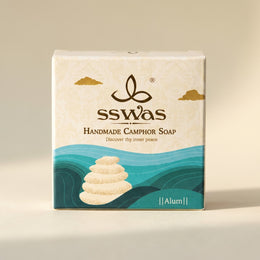
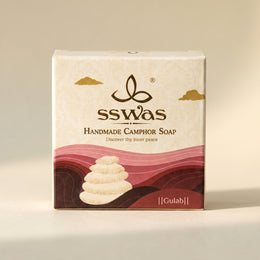
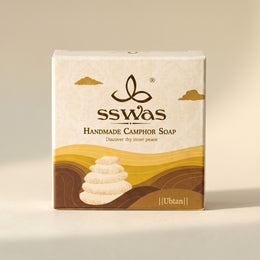
Every sswas soap carries camphor, the same ingredient that has marked sacred thresholds in Indian culture for centuries. It cleans. And it carries something more. A scent that stills you before the day has a chance to rush you.
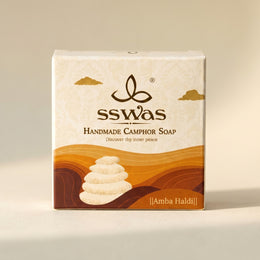
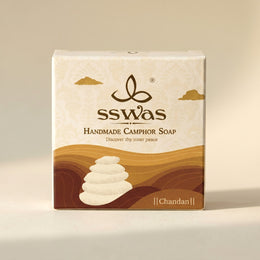
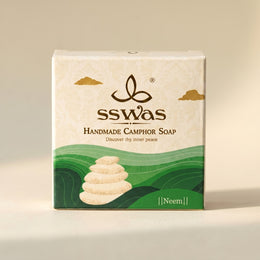
Blended with herbs that carry centuries of intention, neem that has grounded generations, chandan that has marked sacred mornings, amba haldi that connects you to something older than memory, each bar is made in small batches, by hand, with the understanding that the object you hold during your most personal ritual deserves to be made with care.
The shower has always done more than clean the body. sswas was built to help you feel that again.
Discover Thy Inner Peace. sswas Handmade Camphor Soaps. Explore the collection at sswas.in