Camphor Has Been in Indian Homes for 2,000 Years. Here Is Why It Never Left.

For most of us, camphor means one thing growing up. The pooja room. Aarti. That sharp, clean smell that meant something was beginning or something was being marked. It was always present, always purposeful, and somehow always made the air in that room feel different from the rest of the house.
What is less known is that camphor was never only for prayer. Long before it became associated with ritual spaces, Indian households had built it into the morning in ways that had nothing to do with ceremony and everything to do with how they wanted to feel when the day began.
That is the part of camphor's story that got quietly forgotten. And it is exactly the part that sswas was built to bring back.
What Camphor Is and Where It Comes From
Camphor comes from the wood of the Cinnamomum camphora tree, native to South and Southeast Asia. In India, the most respected form has always been Bhimsen camphor, naturally derived and entirely distinct from the synthetic camphor that arrived with industrialisation in the twentieth century.
For most of its history in India, camphor was not primarily a skincare ingredient or a medicine. It was something people reached for when they wanted a space, or a moment, to feel different. Clearer. More settled. The kind of feeling you cannot fully explain but recognise immediately when it arrives.
That quality moved naturally from the prayer room into the rest of daily life. Into the morning. Into the bath. Into the everyday practice of people who understood that how you begin the day has something to do with how the day goes. Camphor did not need to be reinvented for that purpose. It just needed to be carried forward.
Why It Stayed
Most things from two thousand years ago did not survive the twentieth century. Languages changed. Ingredients were forgotten. Practices that required time and attention dissolved under the pressure of modern life.
Camphor stayed.
It stayed because it was never reserved for special occasions. It was part of the ordinary rhythm of a household. Part of the morning. Part of the bath. Part of the everyday practice of people who understood that how you begin the day has something to do with how the day goes.
Grandmothers kept it in small tins. Children grew up with that scent as the smell of something starting. Of a day being approached with a little care rather than just gotten through.
That is not nostalgia. That is accumulated, generational wisdom about what it feels like to treat your own wellbeing as something worth attending to. Every single morning. Not just when things go wrong.
What Camphor Actually Does
The reason camphor stayed in Indian households for two thousand years is not sentimental. It is sensory.
The scent of camphor is one of the most immediately recognisable in the natural world. It does not ease its way in. It arrives. And when it does, something in the quality of the moment shifts. The air feels cleaner. The mind feels slightly less cluttered. There is a settling that happens before you have even decided to settle.
This is not a modern discovery. It is an old observation, made by people who paid close attention to how things felt and passed what they noticed forward to the people who came after them.
Dissolved in warm water, the effect is even more immediate. The steam carries the scent directly into the breath. The warmth of the water opens the skin. The combination of sensation, scent, warmth, and the simple act of being still for a few minutes creates something that is difficult to name but very easy to feel.
Which is probably why, across two thousand years and every kind of change that India has lived through, camphor never quite left the bathroom shelf.
What Has Not Changed
The world that first built camphor into the Indian morning looks almost nothing like the world we live in now. The pace is different. The pressures are different. The morning looks entirely different.
And yet the need that camphor answered then is the same need it answers now. The need to begin the day feeling settled rather than scattered. Present rather than already somewhere else. Like yourself, before the day has a chance to pull you in every direction.
Some things survive not because they are traditional but because they are true. Camphor is one of them.
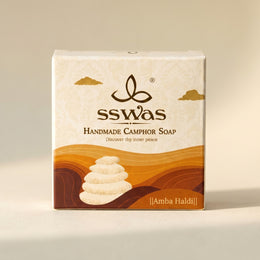
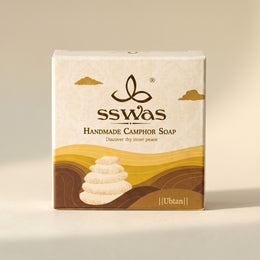
Discover Thy Inner Peace. sswas Handmade Camphor Soaps. Explore the collection at sswas.in